Buy xpr.eu ?
We are moving the project
xpr.eu .
Are you interested in purchasing the domain
xpr.eu ?
domain@kv-gmbh.de · 0541-91531010
Buy xpr.eu ?
What are the solutions to Vieta's theorem?
Vieta's theorem provides solutions to the quadratic equation in terms of its coefficients. For a quadratic equation of the form ax^2 + bx + c = 0, the solutions are given by x = (-b ± √(b^2 - 4ac)) / (2a). These solutions represent the values of x at which the quadratic equation crosses the x-axis. Vieta's theorem also provides a relationship between the solutions and the coefficients of the quadratic equation, stating that the sum of the solutions is equal to -b/a and the product of the solutions is equal to c/a. **
What does the angle at the edge theorem state?
The angle at the edge theorem states that the exterior angle of a triangle is equal to the sum of the two opposite interior angles. In other words, if you extend one side of a triangle, the angle formed by the extension is equal to the sum of the two opposite interior angles. This theorem is a fundamental concept in geometry and is used to solve various problems involving triangles and their angles. **

Similar search terms for Theorem
Top-Angebote
Products related to Theorem:
-
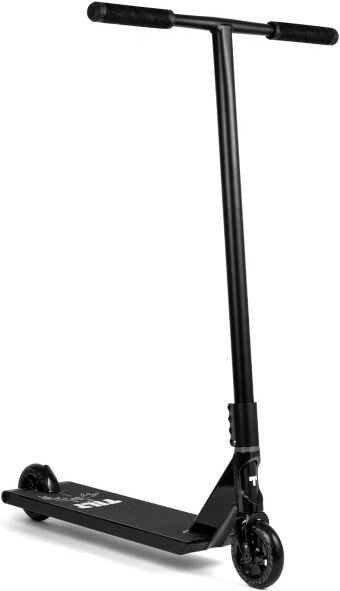
Pro Scooter Tilt Theorem Build (Chiseled) - BlackThe Tilt Theorem Build Stunt Scooter is crafted for riders at intermediate and advanced stages. This stunt scooter is brimming with attributes aimed at elevating your riding skills. Featuring a lightweight and robust aluminium 6000 Series deck, it is ideal for both park and street scenarios. Moreover, it comes fitted with a responsive fork, Tilt SCS compression, and a wheel configuration with a 120mm diameter, showcasing resilient aluminium cores and high-rebound urethane. The Tilt Theorem Build Stunt Scooter is engineered to deliver an optimal riding experience. Its concave deck shape combined with a T-shaped handlebar ensures significant control and comfort. With its elegant design and premium components, the Tilt Theorem Build Stunt Scooter is the optimal selection for those seeking to challenge their boundaries and elevate their riding prowess.319,95 £*Shipping: 0,00 £Secure redirect to the provider
-
Inspired Living Advanced LED Phototherapy Facial & Neck Rejuvenation Mask 240 LED Infrared Skin Renewal Technology black FaceRediscover youthful, radiant skin without costly spa visits. Our Advanced LED Phototherapy Facial & Neck Rejuvenation Mask combines powerful light therapy with fullcoverage design to help reduce the look of fine lines, wrinkles, and uneven tone....239,97 $*Shipping: 0,00 $Secure redirect to the provider
-
Inspired Finds ErgoRelief Cervical Support Pillow Advanced Black Technology Hose Pillow For Deep Sleep & Neck Protection linen 45x45cmWake up feeling rested and painfree with the ErgoRelief Cervical Support Pillow, engineered using cuttingedge black technology materials to deliver unmatched comfort and spine alignment. Designed for those who suffer from neck stiffness or sleepless...131,99 $*Shipping: 0,00 $Secure redirect to the provider


-
What is the Pythagorean theorem and the altitude theorem?
The Pythagorean theorem states that in a right-angled triangle, the square of the length of the hypotenuse (the side opposite the right angle) is equal to the sum of the squares of the lengths of the other two sides. This can be expressed as a^2 + b^2 = c^2, where c is the length of the hypotenuse, and a and b are the lengths of the other two sides. The altitude theorem, also known as the geometric mean theorem, states that in a right-angled triangle, the altitude (the perpendicular line from the right angle to the hypotenuse) is the geometric mean between the two segments of the hypotenuse. This can be expressed as h^2 = p * q, where h is the length of the altitude, and p and q are the lengths of the two segments of the hypotenuse. **
-
What is the Pythagorean theorem and the cathetus theorem?
The Pythagorean theorem states that in a right-angled triangle, the square of the length of the hypotenuse (the side opposite the right angle) is equal to the sum of the squares of the lengths of the other two sides. In mathematical terms, it can be written as a^2 + b^2 = c^2, where c is the length of the hypotenuse, and a and b are the lengths of the other two sides, called catheti. The cathetus theorem, also known as the converse of the Pythagorean theorem, states that if the square of the length of the longest side of a triangle is equal to the sum of the squares of the lengths of the other two sides, then the triangle is a right-angled triangle. In other words, if a^2 + b^2 = c^2, then the triangle is a right-angled triangle, where c is the longest side (hypotenuse) and a and b are **
-
Do the solutions of Vieta's theorem and the quadratic formula not agree?
The solutions of Vieta's theorem and the quadratic formula do agree. Vieta's theorem provides a relationship between the roots of a quadratic equation and its coefficients, while the quadratic formula directly gives the values of the roots. Both methods yield the same solutions for the roots of a quadratic equation, demonstrating that they are consistent with each other. Therefore, the solutions of Vieta's theorem and the quadratic formula do agree. **
-
How can the altitude theorem and the cathetus theorem be transformed?
The altitude theorem and the cathetus theorem can be transformed by applying them in different geometric shapes and contexts. For example, the altitude theorem, which states that the length of the altitude of a triangle is inversely proportional to the length of the corresponding base, can be applied to various types of triangles and even extended to other polygons. Similarly, the cathetus theorem, which relates the lengths of the two perpendicular sides of a right triangle to the length of the hypotenuse, can be generalized to other right-angled shapes or even applied in three-dimensional geometry. By exploring different scenarios and shapes, these theorems can be adapted and transformed to solve a wide range of geometric problems. **

What are the altitude theorem and the cathetus theorem of Euclid?
The altitude theorem of Euclid states that in a right-angled triangle, the square of the length of the altitude drawn to the hypotenuse is equal to the product of the lengths of the two segments of the hypotenuse. This theorem is also known as the geometric mean theorem. The cathetus theorem of Euclid states that in a right-angled triangle, the square of the length of one of the catheti (the sides that form the right angle) is equal to the product of the lengths of the hypotenuse and the segment of the hypotenuse adjacent to that cathetus. This theorem is also known as the Pythagorean theorem. Both the altitude theorem and the cathetus theorem are fundamental principles in the study of geometry and are essential for understanding the properties of right-angled triangles. **
What is Thales' theorem?
Thales' theorem states that if A, B, and C are points on a circle where the line AC is a diameter, then the angle at B is a right angle. In other words, if a triangle is inscribed in a circle with one of its sides being the diameter of the circle, then that triangle is a right triangle. Thales' theorem is a fundamental result in geometry and is named after the ancient Greek mathematician Thales of Miletus. **
Top-Angebote
Products related to Theorem:
-
StayWell Innovative Anti Fungal Laser Pen With Cutting Edge Fungal Infections Removal And Safe for Skin Technology Innovative Anti Fungal Laser Pen With Cutting Edge Fungal Infections Removal And Safe for Skin TechnologyDo you avoid going barefoot or wearing sandals because of your unsightly nails If so, our AntiFungal Laser Pen is the solution you've been looking for. Our laser pen combines the power of the infrared pulsed laser and blue light to exterminate...20,97 $*Shipping: 0,00 $Secure redirect to the provider
-
Pro Scooter Tilt Theorem Build (Chiseled) - BlackThe Tilt Theorem Build Stunt Scooter is crafted for riders at intermediate and advanced stages. This stunt scooter is brimming with attributes aimed at elevating your riding skills. Featuring a lightweight and robust aluminium 6000 Series deck, it is ideal for both park and street scenarios. Moreover, it comes fitted with a responsive fork, Tilt SCS compression, and a wheel configuration with a 120mm diameter, showcasing resilient aluminium cores and high-rebound urethane. The Tilt Theorem Build Stunt Scooter is engineered to deliver an optimal riding experience. Its concave deck shape combined with a T-shaped handlebar ensures significant control and comfort. With its elegant design and premium components, the Tilt Theorem Build Stunt Scooter is the optimal selection for those seeking to challenge their boundaries and elevate their riding prowess.319,95 £*Shipping: 0,00 £Secure redirect to the provider
-
Inspired Living Advanced LED Phototherapy Facial & Neck Rejuvenation Mask 240 LED Infrared Skin Renewal Technology black FaceRediscover youthful, radiant skin without costly spa visits. Our Advanced LED Phototherapy Facial & Neck Rejuvenation Mask combines powerful light therapy with fullcoverage design to help reduce the look of fine lines, wrinkles, and uneven tone....239,97 $*Shipping: 0,00 $Secure redirect to the provider
-
What are the solutions to Vieta's theorem?
Vieta's theorem provides solutions to the quadratic equation in terms of its coefficients. For a quadratic equation of the form ax^2 + bx + c = 0, the solutions are given by x = (-b ± √(b^2 - 4ac)) / (2a). These solutions represent the values of x at which the quadratic equation crosses the x-axis. Vieta's theorem also provides a relationship between the solutions and the coefficients of the quadratic equation, stating that the sum of the solutions is equal to -b/a and the product of the solutions is equal to c/a. **
-
What does the angle at the edge theorem state?
The angle at the edge theorem states that the exterior angle of a triangle is equal to the sum of the two opposite interior angles. In other words, if you extend one side of a triangle, the angle formed by the extension is equal to the sum of the two opposite interior angles. This theorem is a fundamental concept in geometry and is used to solve various problems involving triangles and their angles. **
-
What is the Pythagorean theorem and the altitude theorem?
The Pythagorean theorem states that in a right-angled triangle, the square of the length of the hypotenuse (the side opposite the right angle) is equal to the sum of the squares of the lengths of the other two sides. This can be expressed as a^2 + b^2 = c^2, where c is the length of the hypotenuse, and a and b are the lengths of the other two sides. The altitude theorem, also known as the geometric mean theorem, states that in a right-angled triangle, the altitude (the perpendicular line from the right angle to the hypotenuse) is the geometric mean between the two segments of the hypotenuse. This can be expressed as h^2 = p * q, where h is the length of the altitude, and p and q are the lengths of the two segments of the hypotenuse. **
-
What is the Pythagorean theorem and the cathetus theorem?
The Pythagorean theorem states that in a right-angled triangle, the square of the length of the hypotenuse (the side opposite the right angle) is equal to the sum of the squares of the lengths of the other two sides. In mathematical terms, it can be written as a^2 + b^2 = c^2, where c is the length of the hypotenuse, and a and b are the lengths of the other two sides, called catheti. The cathetus theorem, also known as the converse of the Pythagorean theorem, states that if the square of the length of the longest side of a triangle is equal to the sum of the squares of the lengths of the other two sides, then the triangle is a right-angled triangle. In other words, if a^2 + b^2 = c^2, then the triangle is a right-angled triangle, where c is the longest side (hypotenuse) and a and b are **
Similar search terms for Theorem
-
Inspired Finds ErgoRelief Cervical Support Pillow Advanced Black Technology Hose Pillow For Deep Sleep & Neck Protection linen 45x45cmWake up feeling rested and painfree with the ErgoRelief Cervical Support Pillow, engineered using cuttingedge black technology materials to deliver unmatched comfort and spine alignment. Designed for those who suffer from neck stiffness or sleepless...131,99 $*Shipping: 0,00 $Secure redirect to the provider
-
Inspired Living Advanced LED Phototherapy Facial & Neck Rejuvenation Mask 240 LED Infrared Skin Renewal Technology white FaceRediscover youthful, radiant skin without costly spa visits. Our Advanced LED Phototherapy Facial & Neck Rejuvenation Mask combines powerful light therapy with fullcoverage design to help reduce the look of fine lines, wrinkles, and uneven tone....239,97 $*Shipping: 0,00 $Secure redirect to the provider
-
Do the solutions of Vieta's theorem and the quadratic formula not agree?
The solutions of Vieta's theorem and the quadratic formula do agree. Vieta's theorem provides a relationship between the roots of a quadratic equation and its coefficients, while the quadratic formula directly gives the values of the roots. Both methods yield the same solutions for the roots of a quadratic equation, demonstrating that they are consistent with each other. Therefore, the solutions of Vieta's theorem and the quadratic formula do agree. **
-
How can the altitude theorem and the cathetus theorem be transformed?
The altitude theorem and the cathetus theorem can be transformed by applying them in different geometric shapes and contexts. For example, the altitude theorem, which states that the length of the altitude of a triangle is inversely proportional to the length of the corresponding base, can be applied to various types of triangles and even extended to other polygons. Similarly, the cathetus theorem, which relates the lengths of the two perpendicular sides of a right triangle to the length of the hypotenuse, can be generalized to other right-angled shapes or even applied in three-dimensional geometry. By exploring different scenarios and shapes, these theorems can be adapted and transformed to solve a wide range of geometric problems. **
-
What are the altitude theorem and the cathetus theorem of Euclid?
The altitude theorem of Euclid states that in a right-angled triangle, the square of the length of the altitude drawn to the hypotenuse is equal to the product of the lengths of the two segments of the hypotenuse. This theorem is also known as the geometric mean theorem. The cathetus theorem of Euclid states that in a right-angled triangle, the square of the length of one of the catheti (the sides that form the right angle) is equal to the product of the lengths of the hypotenuse and the segment of the hypotenuse adjacent to that cathetus. This theorem is also known as the Pythagorean theorem. Both the altitude theorem and the cathetus theorem are fundamental principles in the study of geometry and are essential for understanding the properties of right-angled triangles. **
-
What is Thales' theorem?
Thales' theorem states that if A, B, and C are points on a circle where the line AC is a diameter, then the angle at B is a right angle. In other words, if a triangle is inscribed in a circle with one of its sides being the diameter of the circle, then that triangle is a right triangle. Thales' theorem is a fundamental result in geometry and is named after the ancient Greek mathematician Thales of Miletus. **
* All prices are inclusive of VAT and, if applicable, plus shipping costs. The offer information is based on the details provided by the respective shop and is updated through automated processes. Real-time updates do not occur, so deviations can occur in individual cases. ** Note: Parts of this content were created by AI.